
Small Batch Baking: Big Flavor in Tiny Spaces
Hi, I’m Olivia Bennett. If you’ve ever looked at a standard baking recipe calling for a 9x13 inch pan and felt a wave of exhaustion, you aren't alone. As someone who spends half my time in a professional kitchen and the other half in my cramped city apartment, I know the struggle. We often think baking requires a sprawling countertop, industrial mixers, and an appetite for a dozen muffins that will go stale before we can finish them.
But here is the secret: you don’t need an expansive kitchen to be a great baker. Small-batch baking is the art of scaling down, focusing on quality over quantity, and ensuring that your midnight cravings are satisfied without leaving you with three dozen cookies to hide from yourself.
The Challenges of Scaling Down
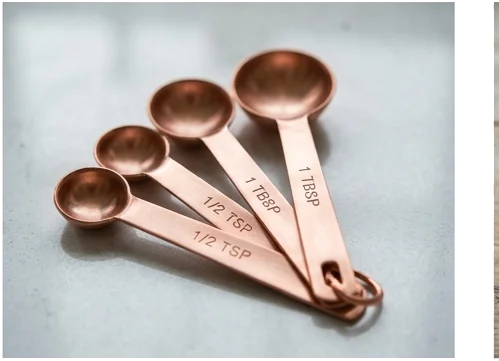
The biggest hurdle in small-batch baking is precision. When you divide a recipe by four, a "pinch" of salt or a "splash" of vanilla becomes dangerously easy to mess up. In pastry, ratios are chemistry. If you over-adjust, you lose the structure of your crumb or the snap of your crust.
Another challenge is the "leftover ingredient" trap. What do you do with half an egg? How do you store the remaining quarter-cup of buttermilk? These logistical headaches often deter people from scaling recipes. However, with a few adjustments to your technique and mindset, you can turn these challenges into a streamlined, stress-free routine.
Practical Tips for Scaling Your Recipes
I have spent years tweaking formulas to fit my smaller workspace. Here are my go-to rules for ensuring your tiny batch turns out just as delicious as the full-sized original.
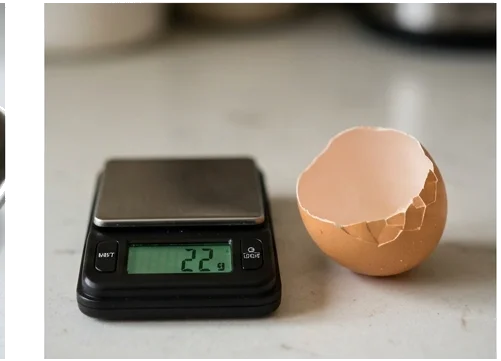
- Invest in a digital scale: This is non-negotiable. Measuring flour by the cup is inconsistent, especially when you are working with small amounts where a tablespoon makes a huge percentage difference. Grams are the universal language of accuracy.
- Think in weights, not volume: If your recipe calls for one large egg, don't try to use half. Crack the egg into a bowl, whisk it, and weigh it. Then, use half the weight. This is the only way to ensure your ratios remain perfect.
- The "Room Temperature" rule: In small batches, cold butter or cold eggs will ruin your emulsion faster than in a large batch. Because there is less mass, the temperature changes much quicker. Keep everything at room temperature unless the recipe specifies otherwise.
- Watch your oven: Smaller pans conduct heat differently. A tiny brownie pan will bake much faster than a standard one. Start checking your bake at 75% of the suggested time to avoid burnt edges.
My Favorite Small-Batch Pairings
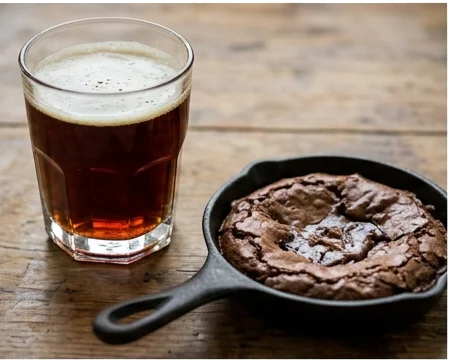
Baking for one or two doesn't mean you can't have a sophisticated experience. I love pairing my small-batch bakes with specific drinks to turn a simple snack into a ritual. A warm, single-serve skillet cookie pairs beautifully with a robust, malty brown ale. The caramel notes of the malt play off the brown sugar in the cookie perfectly.
If you prefer a cocktail, try a small batch of lemon shortbread cookies alongside a classic Gin Fizz. The acidity of the drink cuts through the buttery, rich texture of the shortbread, making it feel like a high-end dessert course in your own kitchen.
A Quick Starter Recipe: The Perfect Mini-Batch Shortbread
This is my go-to when I want a treat but don't want the cleanup. It uses basic pantry staples and is ready in under 30 minutes.
- 50g unsalted butter, softened
- 25g granulated sugar
- 75g all-purpose flour
- A tiny pinch of sea salt
- Optional: A drop of vanilla bean paste
Instructions for Success
- Cream the butter and sugar until pale and fluffy—this aeration is key for a tender crumb.
- Gently fold in the flour and salt until just combined. Do not overmix, or the shortbread will become tough rather than sandy.
- Press the dough into a small ramekin or a lined 4-inch mini springform pan.
- Bake at 325°F (160°C) for about 15–18 minutes until the edges are just barely golden.
- Let it cool completely in the pan; this allows the butter to set so you get that perfect, crisp bite.
Small-batch baking is about freedom. It’s about taking control of your ingredients and enjoying the process without the pressure of mass production. Whether you are scaling down a sourdough loaf or whipping up a single cupcake, remember that the quality of your ingredients is what defines the final bite. Happy baking, and keep your kitchen small but your ambitions large. If you want to turn that idea into a warm gathering, try planning a cozy baking night around pastries, tea, and simple optional entertainment.
Leave a Reply or Contact Us
Have questions about the recipe or want to share your baking results? Fill out the form below!